
Pythagorean Theorem Calculator
Please provide any 2 values below to solve the Pythagorean equation: a2 + b2 = c2.

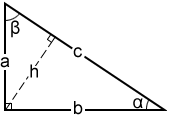
Use this calculator to instantly find any missing side of a right triangle. Enter two known sides, and it solves for the third using the formula a² + b² = c². To find the hypotenuse (c), input legs a and b. The tool calculates √(a² + b²). To find a missing leg, input the hypotenuse and the known leg. It computes √(c² - a²). No manual square roots required.
Most online articles explain the Pythagorean theorem the same way—textbook definitions, a few examples, maybe a 3-4-5 triangle reference. This guide ignores the textbook. We are looking at practical applications, the calculation errors that plague construction sites, and how this 2,500-year-old formula powers modern technology from video game rendering to machine learning algorithms.
The Anti-Consensus Reality: Why a² + b² = c² Fails in Digital Space
Math is exact. Calculators are not.
We are taught that the Pythagorean theorem is a flawless mathematical law. In pure geometry, it is. In the digital environment of a web calculator, a smartphone app, or a 3D rendering engine, it breaks down. The culprit is floating-point arithmetic.
When you input a leg of 1 and another leg of 1, the true mathematical answer is √2. But web calculators operate on the IEEE 754 standard for double-precision floats. They cannot process infinite irrational numbers. Instead of √2, the calculator returns 1.4142135623730951. It truncates the reality of the triangle.
In a middle school math class, this truncation does not matter. In software engineering, it causes catastrophic drift. If a physics engine calculates the trajectory of a bouncing object using truncated hypotenuse values thousands of times per second, the object will slowly veer off course. The digital representation of space warps. Understanding your calculator means understanding its limits: it does not give you the exact length of an irrational hypotenuse. It gives you a highly accurate approximation.
Calculator Mechanics: Interface, Input Methods, and Logic
A properly designed Pythagorean theorem calculator requires only three input fields: side a, side b, and side c. You leave one blank. The underlying logic handles the algebraic isolation.
The Three Calculation Modes
- Mode 1: Solving for the Hypotenuse (c). You input legs a and b. The calculator squares both, sums them, and applies a square root function. Equation:
c = √(a² + b²). - Mode 2: Solving for Leg (a). You input hypotenuse c and leg b. The system squares both, subtracts b² from c², and finds the root. Equation:
a = √(c² - b²). - Mode 3: Solving for Leg (b). You input hypotenuse c and leg a. The system subtracts a² from c² and finds the root. Equation:
b = √(c² - a²).
The JavaScript Engine Under the Hood
If you inspect the source code of a standard web-based right triangle calculator, the mathematical engine usually looks like this:
function calculatePythagoras(a, b, c) {
    if (a && b && !c) {
        return Math.sqrt(Math.pow(a, 2) + Math.pow(b, 2));
    } else if (a && c && !b) {
        if (a >= c) return "Error: Hypotenuse must be the longest side.";
        return Math.sqrt(Math.pow(c, 2) - Math.pow(a, 2));
    } else if (b && c && !a) {
        if (b >= c) return "Error: Hypotenuse must be the longest side.";
        return Math.sqrt(Math.pow(c, 2) - Math.pow(b, 2));
    }
    return "Error: Enter exactly two values.";
}
Notice the stress test built into the code. The hypotenuse must always be the longest side. If a user inputs a leg of 10 and a hypotenuse of 8, the mathematical result of c² - a² (64 - 100) is -36. Taking the square root of a negative number forces the calculator into imaginary numbers (6i), which cannot exist as physical triangle lengths. The calculator must throw an error.
Generating Exact Geometry: The Mechanics of Pythagorean Triples
Irrational numbers are messy. To avoid them, mathematicians and builders rely on Pythagorean triples—sets of three integers that perfectly satisfy the a² + b² = c² equation without decimal remainders.
The 3-4-5 triangle is the most famous. 3² (9) + 4² (16) = 5² (25). But there are infinitely many triples. They are categorized into two types: primitive and non-primitive.
Primitive vs. Non-Primitive Triples
A primitive Pythagorean triple consists of three numbers that share no common divisor other than 1. The set 3-4-5 is primitive. The set 5-12-13 is primitive. The set 8-15-17 is primitive.
A non-primitive triple is simply a scaled-up version of a primitive triple. If you multiply the 3-4-5 triangle by 2, you get 6-8-10. Multiply it by 10, you get 30-40-50. The ratio remains identical; only the scale changes.
Euclid's Formula for Generating Triples
You do not have to guess to find these whole-number triangles. Around 300 BCE, Euclid documented a formula to generate primitive Pythagorean triples using two arbitrary integers, m and n, where m > n > 0.
The formulas are:
- Side a: m² - n²
- Side b: 2mn
- Hypotenuse c: m² + n²
Let's run a stress test using m = 2 and n = 1.
- a = 2² - 1² = 4 - 1 = 3
- b = 2(2)(1) = 4
- c = 2² + 1² = 4 + 1 = 5
The result is the classic 3-4-5 triangle.
Now, let's test larger inputs: m = 5 and n = 2.
- a = 5² - 2² = 25 - 4 = 21
- b = 2(5)(2) = 20
- c = 5² + 2² = 25 + 4 = 29
Check the math: 21² (441) + 20² (400) = 29² (841). It works perfectly.
Table of Common Primitive Triples
| m value | n value | Leg a (m² - n²) | Leg b (2mn) | Hypotenuse c (m² + n²) |
|---|---|---|---|---|
| 2 | 1 | 3 | 4 | 5 |
| 3 | 2 | 5 | 12 | 13 |
| 4 | 1 | 15 | 8 | 17 |
| 4 | 3 | 7 | 24 | 25 |
| 5 | 2 | 21 | 20 | 29 |
| 5 | 4 | 9 | 40 | 41 |
| 6 | 1 | 35 | 12 | 37 |
| 7 | 4 | 33 | 56 | 65 |
Spatial Stress Tests: Construction, Carpentry, and Architecture
Carpenters do not use the Pythagorean theorem to pass math tests. They use it to ensure buildings do not collapse. If a foundation is out of square, every subsequent framing stage—walls, joists, roof trusses—will compound the error. A 1/4-inch deviation at the foundation becomes a 2-inch nightmare at the roofline.
Squaring a Foundation: The 30-40-50 Rule
When laying out a rectangular foundation, builders establish two intersecting lines representing the walls. To guarantee these lines form a perfect 90-degree angle, they scale up the 3-4-5 triangle to 30-40-50.
Step-by-step application:
- Measure exactly 30 feet down the length of the first wall line. Mark the point.
- Measure exactly 40 feet down the intersecting wall line. Mark the point.
- Measure the diagonal distance between the two marks.
- If the diagonal is exactly 50 feet, the corner is perfectly square (90 degrees).
- If the diagonal is greater than 50 feet, the angle is obtuse (too wide). The walls must be moved inward.
- If the diagonal is less than 50 feet, the angle is acute (too narrow). The walls must be pushed outward.
For smaller projects, like a backyard deck or a shed, builders use 6-8-10 or 9-12-15. The math scales infinitely.
Calculating Stair Stringers
Stairs are just a series of right triangles. The horizontal depth of the stair is the run (leg a). The vertical height is the rise (leg b). The structural board that supports the stairs is the stringer, which sits on the diagonal—the hypotenuse (c).
If a deck is 36 inches off the ground, and the stairs need to extend 48 inches out from the deck, how long must the uncut stringer board be?
- Rise (a) = 36
- Run (b) = 48
- Stringer (c) = √(36² + 48²)
- Stringer (c) = √(1296 + 2304)
- Stringer (c) = √3600 = 60 inches.
The builder knows they must purchase a board at least 60 inches long (usually longer to account for attachment cuts) to span the gap.
Roof Pitch and Rafter Lengths
Roofers use the theorem daily. Roof pitch is expressed as a ratio of rise over run, typically based on a 12-inch horizontal run. A "6/12 pitch" means the roof rises 6 inches vertically for every 12 inches it runs horizontally.
To find the length of the rafter (the hypotenuse), you calculate √(6² + 12²) = √(36 + 144) = √180 = 13.416 inches. This means for every horizontal foot of the house, the rafter must be 13.416 inches long.
If a house is 24 feet wide, the run to the center peak is 12 feet. To find the total rafter length, multiply the hypotenuse per foot (13.416 inches) by the total run (12 feet).
- 13.416 × 12 = 160.992 inches.
- Divide by 12 to get feet: 13.416 feet.
Beyond 2D: The 3D Pythagorean Theorem
The standard theorem governs two-dimensional flat planes. But we live in three-dimensional space. The a² + b² = c² formula expands seamlessly to calculate diagonals through 3D objects, such as rooms, boxes, or shipping containers.
The 3D formula is: d² = l² + w² + h²
Where d is the 3D diagonal, l is length, w is width, and h is height.
How the 3D Expansion Works
The 3D formula is just the standard Pythagorean theorem applied twice.
Imagine a rectangular box. First, you need the diagonal across the flat bottom of the box. You use the standard theorem: Bottom Diagonal² = Length² + Width².
Now, you have a new right triangle standing up inside the box. Its base is the Bottom Diagonal. Its vertical leg is the Height of the box. The hypotenuse of this new triangle is the true 3D diagonal cutting through the center of the box.
3D Diagonal² = Bottom Diagonal² + Height²
Since Bottom Diagonal² is equal to Length² + Width², you substitute it in: 3D Diagonal² = Length² + Width² + Height².
Real-World 3D Application: The Elevator Problem
You need to transport a rigid metal pipe in a standard freight elevator. The elevator dimensions are 8 feet long, 6 feet wide, and 10 feet high. What is the absolute longest pipe that can fit inside?
Most people calculate the floor diagonal: √(8² + 6²) = √(64 + 36) = √100 = 10 feet. They assume a 10-foot pipe is the maximum.
They are ignoring the Z-axis. You can tilt the pipe from the bottom left front corner to the top right back corner.
Apply the 3D formula:
- d = √(l² + w² + h²)
- d = √(8² + 6² + 10²)
- d = √(64 + 36 + 100)
- d = √200 ≈ 14.14 feet.
By utilizing 3D space, you can fit a pipe over 14 feet long into an elevator that is only 8 feet wide.
Cartesian Distance: The Theorem in Coordinate Geometry
When Rene Descartes mapped geometry onto a grid system (the Cartesian plane), the Pythagorean theorem became the foundation for all distance calculations.
If you have two points on a graph, Point 1 (x₁, y₁) and Point 2 (x₂, y₂), you cannot simply measure the diagonal. You must turn the space between them into a right triangle.
The horizontal distance between the points is the difference in their x-coordinates: (x₂ - x₁). This is Leg A.
The vertical distance between the points is the difference in their y-coordinates: (y₂ - y₁). This is Leg B.
Plug these legs into the Pythagorean theorem, and you get the Distance Formula:
Distance = √[ (x₂ - x₁)² + (y₂ - y₁)² ]
Stress Test: Calculating Map Distance
A ship is located at grid coordinates (3, 4). A lighthouse is located at (15, 9). How far apart are they?
- Leg A (x-axis) = 15 - 3 = 12
- Leg B (y-axis) = 9 - 4 = 5
- Distance = √(12² + 5²)
- Distance = √(144 + 25)
- Distance = √169 = 13 units.
This exact mathematical framework is what allows GPS systems, radar, and air traffic control software to calculate the distance between two moving targets on a 2D grid.
Trigonometric Identity: The Hidden Pythagorean
Trigonometry and the Pythagorean theorem are the same mathematical concept expressed in different languages. The theorem calculates lengths. Trigonometry calculates ratios and angles. They intersect at the most fundamental rule in trigonometry: the Pythagorean Identity.
The identity states: sin²(θ) + cos²(θ) = 1
Why does this work? Draw a right triangle inside a unit circle (a circle with a radius of 1). The hypotenuse of this triangle is the radius of the circle, so c = 1.
In trigonometry, the sine of an angle (θ) is the opposite leg over the hypotenuse. Since the hypotenuse is 1, the sine is simply the length of the opposite leg (y). So, y = sin(θ).
The cosine of the angle is the adjacent leg over the hypotenuse. Again, since the hypotenuse is 1, the cosine is the length of the adjacent leg (x). So, x = cos(θ).
Substitute these into the Pythagorean theorem (x² + y² = c²):
[cos(θ)]² + [sin(θ)]² = 1²
This identity allows engineers to solve complex wave functions, calculate alternating current in electrical grids, and model acoustic frequencies, all using the geometric logic of a right triangle.
Programming and Performance: The Computational Cost of Square Roots
In modern software engineering, the Pythagorean theorem is a performance bottleneck. Calculating a² + b² is fast. Addition and multiplication are computationally cheap. But extracting the square root—√c²—is incredibly expensive for a CPU.
In 3D video game development, the engine must calculate the distance between objects millions of times per frame to handle collision detection, lighting falloff, and physics. If a grenade explodes, the game must check the distance from the explosion center to every piece of shrapnel, every player, and every wall. Running the full Pythagorean theorem millions of times per second drops framerates to a crawl.
The "Squared Distance" Optimization
Game developers bypass the square root entirely. If you only need to know which object is closer, you don't need the actual distance. You only need the squared distance.
If Object A is 5 units away, its squared distance is 25.
If Object B is 6 units away, its squared distance is 36.
25 is less than 36. Therefore, Object A is closer. The engine compares a² + b² directly, skipping the √ function. This single optimization saves massive amounts of processing power.
The Fast Inverse Square Root Hack
Sometimes, the exact distance is mandatory, specifically when normalizing vectors for 3D lighting. In the 1990s, the developers of the game Quake III Arena needed a way to calculate 1 / √(x² + y² + z²) faster than the CPU's native math functions.
They implemented an algorithmic hack that directly manipulated the binary representation of the floating-point number. The code contained a now-legendary line:
i = 0x5f3759df - ( i >> 1 ); // what the f***?
This bit-level manipulation provided an incredibly close approximation of the inverse square root in a fraction of the time a standard Pythagorean calculation would take. It is one of the most famous examples of software engineers hacking the Pythagorean theorem for speed.
Machine Learning: Euclidean Distance in N-Dimensional Space
Artificial intelligence and machine learning algorithms do not look at data the way humans do. They look at data as points in space. To determine if two pieces of data are similar, the algorithm measures the distance between them. The tool it uses is the Pythagorean theorem, scaled up to thousands of dimensions.
In data science, this is called Euclidean Distance (or the L2 Norm).
If a machine learning model is trying to predict house prices, it might plot houses based on three variables: square footage, number of bedrooms, and age. This is a 3D space. The algorithm uses the 3D Pythagorean theorem d = √(x² + y² + z²) to find the "distance" between two houses. Houses that are close together in this mathematical space are similar in reality.
But what if the model tracks 50 variables? Square footage, bedrooms, age, zip code, crime rate, school rating, transit access, etc. The human brain cannot visualize a 50-dimensional triangle. The math, however, doesn't care. The Pythagorean theorem scales infinitely.
The formula for N-dimensional Euclidean distance is:
d = √[ (p₁ - q₁)² + (p₂ - q₂)² + ... + (pₙ - qₙ)² ]
Every time a recommendation engine suggests a movie based on your viewing history, or an image recognition AI identifies a face, it is calculating hypotenuses across vast multi-dimensional spaces to find the shortest distance between data points.
Historical Proofs: From Clay Tablets to U.S. Presidents
Pythagoras did not invent the theorem. He merely gets the credit in Western education. The mathematical relationship was understood and utilized by multiple ancient civilizations centuries before Pythagoras was born in 570 BCE.
Plimpton 322: The Babylonian Evidence
In 1922, archaeologists discovered a clay tablet in Iraq, dating back to 1800 BCE—a thousand years before Pythagoras. Known as Plimpton 322, the tablet contains four columns and 15 rows of cuneiform numbers. When translated, these numbers are revealed to be a highly sophisticated list of Pythagorean triples.
The Babylonians were not just aware of the 3-4-5 triangle; they were calculating massive triples, such as 119-120-169 and 4961-6480-8161. Historians debate the tablet's purpose. Some argue it was a trigonometric table for construction; others suggest it was a teacher's answer key for generating math problems.
Chou Pei Suan Ching: The Chinese Visual Proof
Around 1000 BCE, Chinese mathematicians documented the "Gougu theorem" in the astronomical text Chou Pei Suan Ching. The text includes a visual proof known as the hsuan-thu.
The proof shows a large square containing four identical right triangles (with sides 3, 4, and 5). The triangles are arranged around the perimeter, leaving a smaller tilted square in the center. By calculating the area of the large square and subtracting the area of the four triangles, the area of the inner square is isolated. The geometry definitively proves that the area of the hypotenuse square equals the sum of the leg squares. It is an elegant, wordless proof.
President James A. Garfield's Trapezoid Proof
In 1876, five years before becoming the 20th President of the United States, James A. Garfield published an original algebraic proof of the Pythagorean theorem in the New England Journal of Education.
Garfield's method involved drawing a trapezoid. He took a right triangle (sides a, b, c) and drew an identical right triangle next to it, rotated 90 degrees. He then connected the outer points to form a trapezoid.
The proof relies on calculating the area of the trapezoid in two different ways:
- Using the trapezoid area formula: Area = ½(base₁ + base₂) × height. In Garfield's drawing, the bases were a and b, and the height was (a + b). So, Area = ½(a + b)(a + b) = ½(a² + 2ab + b²).
- Summing the internal shapes: The trapezoid contained three triangles. Two were the original a-b-c triangles. The third was a new right triangle formed by the two hypotenuses (sides c and c). The area of the two smaller triangles was 2 × (½ab) = ab. The area of the large c triangle was ½c². Total area = ab + ½c².
Since both methods calculate the area of the same trapezoid, Garfield set them equal to each other:
½(a² + 2ab + b²) = ab + ½c²
Multiply the entire equation by 2 to remove the fractions:
a² + 2ab + b² = 2ab + c²
Subtract 2ab from both sides. The middle terms cancel out, leaving:
a² + b² = c²
It remains one of the most efficient algebraic proofs in mathematical history.
Common Errors and Edge Cases
Even with an automated calculator, users frequently generate incorrect answers due to input errors or misunderstandings of the geometric rules. Here are the most common failures.
1. Adding Before Squaring
The formula is a² + b² = c². It is not (a + b)² = c².
If side a is 3 and side b is 4, you must square them individually: 9 + 16 = 25. The square root is 5.
If you add them first (3 + 4 = 7) and then square them, you get 49. The square root is 7. This violates the triangle inequality theorem. A triangle with sides 3, 4, and 7 cannot exist (the two shorter sides must sum to more than the longest side to form a closed shape).
2. The Hypotenuse Subtraction Error
When solving for a missing leg, the formula rearranges to a² = c² - b². A common mistake is subtracting the hypotenuse from the leg (b² - c²). Because the hypotenuse is always the longest side, squaring it yields the largest number. Subtracting the larger number from the smaller number results in a negative value. You cannot take the square root of a negative area in standard geometry.
3. Unit Mismatch
Calculators are unit-agnostic. They process raw numbers. If you measure side a in feet (e.g., 2) and side b in inches (e.g., 18), entering "2" and "18" into the calculator yields a hypotenuse of 18.11. This number is meaningless.
All inputs must share the same unit. Convert the 2 feet to 24 inches. Input 24 and 18. The calculator yields 30. The hypotenuse is 30 inches.
4. Non-Right Triangles
The Pythagorean theorem only applies to right triangles (triangles with a perfect 90-degree angle). If the angle is 89 degrees or 91 degrees, the formula fails. For non-right triangles, you must use the Law of Cosines: c² = a² + b² - 2ab(cos C). The Pythagorean theorem is actually just a specific application of the Law of Cosines where angle C is 90 degrees (since the cosine of 90 degrees is 0, the entire - 2ab(cos C) term cancels out).
Non-Euclidean Geometry: Where Pythagoras Fails
The final stress test of the theorem is taking it off the flat page entirely. The Pythagorean theorem assumes Euclidean space—a perfectly flat plane. On a curved surface, the rules of geometry collapse.
Imagine the Earth. Draw a point at the North Pole. Draw a line straight down to the equator. Turn exactly 90 degrees, and walk along the equator for a quarter of the Earth's circumference. Turn exactly 90 degrees again, and walk straight back up to the North Pole.
You have just drawn a triangle with three 90-degree angles. A triangle with 270 degrees of internal angles is impossible in flat geometry, yet it exists on a sphere. In this spherical triangle, the Pythagorean theorem no longer applies. The relationship between the sides is governed by spherical trigonometry, specifically the Spherical Pythagorean Theorem: cos(c/R) = cos(a/R) × cos(b/R), where R is the radius of the sphere.
This matters for aviation and global navigation. If a pilot plots a course using standard flat-map Pythagorean calculations over a distance of 3,000 miles, the curvature of the Earth will cause them to miss their destination by hundreds of miles. They must use the Haversine formula, which calculates the great-circle distance between two points on a sphere, factoring in the curve that a² + b² = c² ignores.
The calculator provides immediate, perfect answers for flat space. It is up to the user to know when the space they are measuring is no longer flat.