The following is a list of volume calculators for several common shapes. Please fill in the corresponding fields and click the "Calculate" button.
Sphere Volume Calculator
Cone Volume Calculator
Cube Volume Calculator
Cylinder Volume Calculator
Rectangular Tank Volume Calculator
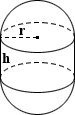
Capsule Volume Calculator
Spherical Cap Volume Calculator
Please provide any two values below to calculate.
Conical Frustum Volume Calculator
Ellipsoid Volume Calculator
Square Pyramid Volume Calculator
Tube Volume Calculator
Compute Accurate 3D Capacity and Material Quantity with a Volume Calculator
Apply the Correct Physics Model Before Entering Numbers
A volume calculator estimates three-dimensional space occupancy (m3, L, ft3, gal) from measured geometry. The governing logic is geometric integration: volume is the integral of cross-sectional area over length, simplified into closed-form equations for standard solids (prism, cylinder, cone, sphere, frustum). In practice, the calculator transforms field dimensions into SI units, applies the selected shape equation, then converts output to operational units such as liters or cubic yards. For construction and process engineering, calculated volume drives procurement (concrete, water, aggregate), hydraulic residence assumptions, and storage compliance checks. Accuracy depends on shape fidelity, measurement precision, and whether internal voids, wall thickness, and slope are modeled explicitly.
Use the Right Formula Set for Each Geometry
Primary Equations
Let all linear dimensions be in meters unless noted.
Rectangular prism (tank/room/slab): V = L × W × H
Cylinder (pipe/tank): V = πr2h
Cone (hopper): V = (1/3)πr2h
Sphere (vessel/ball): V = (4/3)πr3
Frustum of cone (tapered vessel): V = (1/3)πh(R2 + Rr + r2)
Triangular prism: V = (1/2)bh × L (where (1/2)bh is triangle area)
Elliptical cylinder: V = πab h (semi-axes a and b)
Composite Method for Real Objects
For non-standard geometry, split the body into measurable solids, compute each sub-volume, then sum positive volumes and subtract voids:
Vtotal = ΣVsolid,i − ΣVvoid,j
Use Verified Conversion Constants and Field Allowances
Parameter
Value
Standard/Reference
Engineering Use
π
3.141592653589793...
Mathematical constant
All circular/elliptic formulas
1 m3
1000 L
SI exact conversion
Storage and process volume conversion
1 m3
35.3146667 ft3
NIST conversion factors
Metric–imperial interoperability
1 US gal
3.785411784 L
NIST (exact)
US liquid capacity conversion
1 Imp gal
4.54609 L
UK legal metrology
Commonwealth capacity conversion
Concrete over-order allowance
5% to 10%
Common construction practice
Compensates spillage, subgrade variation, waste
Typical tape-measure tolerance
±3 mm over short spans
Field measurement practice
Input uncertainty estimate
Convert Input Data into Reliable Output in Four Steps
Step 1: Standardize Units
Convert all dimensions to one system before calculation. Mixing centimeters and meters is a common 10× to 1000× error source.
Step 2: Select Exact Geometry
Use the shape that matches internal capacity, not outer shell dimensions. For tanks or bins, internal radius/height governs usable volume.
Step 3: Compute Raw Volume
Apply the formula directly. Keep at least four significant digits in intermediate steps to reduce rounding drift.
Step 4: Apply Operational Adjustments
Add waste/overfill factors for procurement or subtract dead volume, freeboard, and internals for process capacity.
Run a Construction-Grade Example (Concrete Slab)
Scenario: A slab is 12.0 m long, 8.0 m wide, and 0.15 m thick. Estimate concrete order volume and cubic-yard equivalent.
1) Base geometry (rectangular prism): V = L × W × H = 12.0 × 8.0 × 0.15 = 14.4 m3
4) Convert to cubic yards:
Using 1 m3 = 1.30795062 yd3, 15.408 × 1.30795062 = 20.15 yd3
Procurement value: Order approximately 20.2 yd3 (or project-specific rounding per supplier truck increment).
Account for Technical Limitations Before Final Decisions
Geometric idealization error: Real objects deviate from perfect solids. Irregular walls, settlement, taper changes, and chamfers can shift results by 1% to 15% depending on complexity.
Measurement uncertainty propagation: If each linear dimension has uncertainty ±δ, the relative volume uncertainty of a rectangular prism approximates δV/V ≈ δL/L + δW/W + δH/H. Small dimension errors can compound materially.
Temperature effects: Fluids and some materials change volume with temperature. For water near ambient, density variation across typical site temperatures can alter mass-volume equivalence enough to matter in calibrated dosing systems.
Usable vs gross volume: Gross geometric volume overstates practical capacity when freeboard, sludge layer, immersion equipment, or no-drain zones exist.
Unit definition mismatch: US gallon and Imperial gallon differ by ~20%; selecting the wrong gallon standard causes immediate reporting error.
Implement Practical QA Checks in the Calculator Workflow
Cross-check output with an alternate unit system (m3 and ft3) to detect conversion mistakes. Compare against bounding estimates (minimum/maximum dimensions) to validate plausibility. For large pours or regulated storage, verify dimensions from drawings and field survey, then reconcile with supplier ticket units. Maintain a revision log of assumptions: inner/outer dimensions, allowance percentage, and excluded voids. If tolerance is tight, run sensitivity testing by perturbing each input dimension by expected measurement error and reviewing resulting volume spread.
Use This Tool as an Engineering Estimate, Not Final Certification
This volume calculator provides mathematical estimation support for planning, procurement, and preliminary design. It does not replace licensed engineering judgment, code compliance review, metrology-certified calibration, or site-specific verification. Final quantities for structural concrete, hazardous storage, pressure systems, and regulated utilities require professional validation against applicable standards, drawings, and inspection data.
Definition and Core Value
A volume calculator is a versatile mathematical tool designed to compute the amount of three-dimensional space occupied by an object or enclosed within a container. Volume is a fundamental measurement expressed in cubic units such as cubic inches, cubic feet, cubic meters, liters, gallons, and many others. This calculator supports dozens of different shapes, from simple geometric forms like cubes and spheres to complex engineering components like tanks and capsules.
The core value of a volume calculator extends across numerous professional fields and everyday applications. Architects use it to determine building space requirements, chefs rely on it for recipe scaling, and engineers depend on it for designing everything from pipelines to storage tanks. The ability to quickly and accurately calculate volumes eliminates costly errors in material estimation and ensures projects proceed with precision and confidence.
How to Use the Volume Calculator Accurately
Using a volume calculator begins with identifying the shape of the object or space you're measuring. Different shapes require different input parameters: a cube needs only one side length, a cylinder requires radius and height, a cone needs radius and height, and irregular shapes may require multiple measurements or the water displacement method. Select the appropriate shape category from the calculator's menu to ensure you're using the correct formula.
For each selected shape, the calculator will display the required input fields. Common measurements include length, width, height, radius, diameter, base area, and sometimes more specialized dimensions like slant height or edge length. Enter your measurements using consistent units throughout—all inputs should be in the same unit system (inches to inches, centimeters to centimeters, etc.) to avoid conversion errors.
Some calculators offer multiple unit options within the same calculation, allowing you to input measurements in one unit while requesting results in another. When dealing with liquids or loose materials, consider whether you need the volume in liquid measurement units (gallons, liters) versus cubic measurement. For tank filling applications, account for the tank's actual usable capacity versus total capacity, as most tanks have curved ends or internal components that reduce usable volume.
Real-World Scenarios and Case Studies
Swimming Pool Construction: A contractor needs to determine the volume of a rectangular swimming pool measuring 40 feet long, 20 feet wide, with a constant depth of 5 feet. The volume calculator shows 40 × 20 × 5 = 4,000 cubic feet, which converts to approximately 29,920 gallons. This calculation determines the correct size for filtration equipment, chemical treatments, and water supply requirements.
Concrete Foundation Estimation: A homeowner planning a detached garage with a slab foundation enters the dimensions (30 feet × 24 feet × 0.5 feet thick) into the volume calculator. The result of 360 cubic feet converts to approximately 13.33 cubic yards of concrete needed. Armed with this figure, they can obtain accurate quotes from concrete suppliers and avoid either ordering too much (wasting money) or too little (causing project delays).
Agricultural Storage Silo: A farmer with a cylindrical grain silo measuring 20 feet in diameter and 40 feet in height uses the volume calculator to determine storage capacity. The calculation (π × 10² × 40 = 12,566 cubic feet) reveals the silo can hold approximately 8,870 bushels of wheat, helping the farmer plan harvest logistics and marketing decisions throughout the growing season.
Target Audience and Key Benefits
Construction Professionals: Contractors, architects, and engineers use volume calculations daily for material estimation, project planning, and quality control. Accurate volume calculations prevent costly material overruns, ensure proper structural design, and help maintain project timelines by eliminating delays caused by incorrect order quantities.
Manufacturing and Industrial Workers: From injection molding to chemical processing, manufacturing relies on precise volume measurements for quality control and efficiency. Knowing exact volumes ensures proper material usage, reduces waste, and maintains consistency in production processes where even small errors can compound into significant cost increases.
Students and Educators: Volume calculators serve as valuable learning tools, helping students understand three-dimensional geometry through practical application. Rather than memorizing formulas in isolation, students can manipulate dimensions and immediately see how changes affect volume, building intuitive understanding of spatial relationships.
Key Benefits: Supports dozens of shape types in one convenient tool; eliminates manual calculation errors; provides instant unit conversions; aids in material cost estimation; helps with capacity planning; and serves both professional and educational purposes across multiple disciplines.
Technical Principles and Mathematical Formulas
Volume calculations derive from basic geometric principles adapted for three-dimensional space. For rectangular prisms (boxes), the formula is straightforward: Volume = Length × Width × Height. This simple multiplication forms the foundation for understanding volume before moving to more complex shapes.
Cylindrical volume follows the principle that a cylinder's volume equals its base area (πr²) multiplied by height: Volume = π × r² × h. Similarly, spherical volume uses the formula Volume = (4/3) × π × r³, reflecting the three-dimensional nature of spheres where volume increases with the cube of the radius.
For irregular shapes that don't fit standard formulas, techniques like the water displacement method (Archimedes' principle) provide accurate measurements. This involves submerging the object in water and measuring the volume of water displaced, which equals the object's volume. Modern volume calculators may also offer approximation methods for complex real-world objects by breaking them into simpler geometric components.
Frequently Asked Questions
Q: How do I calculate the volume of an irregularly shaped object?
A: For irregular objects, you can use the water displacement method (fill a graduated container with water, note the level, submerge the object, and measure the difference), or break the object into simpler geometric shapes, calculate each volume, and sum them together. Some advanced calculators offer integrated shapes that can approximate complex objects.
Q: What's the difference between volume and capacity?
A: Volume refers to the amount of space an object itself occupies (solid matter), while capacity refers to how much a hollow object can hold (liquid or gas). A hollow sphere has volume (the material it's made of) but capacity (the empty interior space). In everyday usage, these terms are often used interchangeably, but in technical contexts, the distinction matters.
Q: How do I convert cubic feet to gallons?
A: One cubic foot equals approximately 7.48 US gallons. To convert, multiply the cubic foot measurement by 7.48. For example, 10 cubic feet × 7.48 = 74.8 gallons. For metric conversions, one cubic meter equals 264.17 US gallons or 1,000 liters.
Q: Why do some shapes require different unit inputs?
A: Different shapes have different geometric properties that define them. A cube needs only one dimension (all sides equal), while a cone needs both radius and height to be fully described. The calculator prompts for the minimum dimensions needed to uniquely determine each shape's volume, ensuring you don't enter unnecessary or redundant measurements.
Q: Can volume calculators handle metric and imperial units simultaneously?
A: Some calculators allow mixed units with automatic conversion, while others require consistent units throughout. If your calculator supports unit selection for each input and output separately, you can typically mix meters and feet, though it's always safest to use consistent units within a single calculation to avoid confusion.